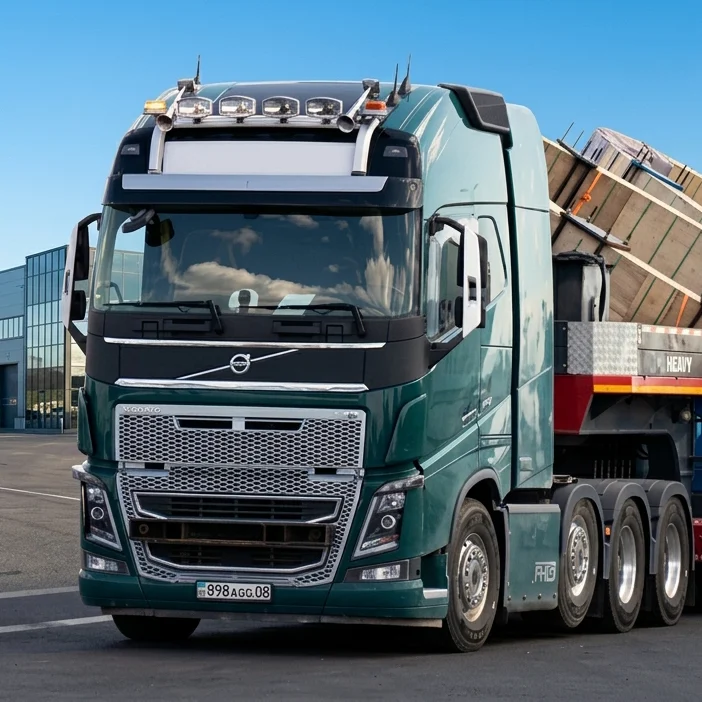
Lowbed Trailers for Oversized Cargo: How Equipment Is Matched to the Load
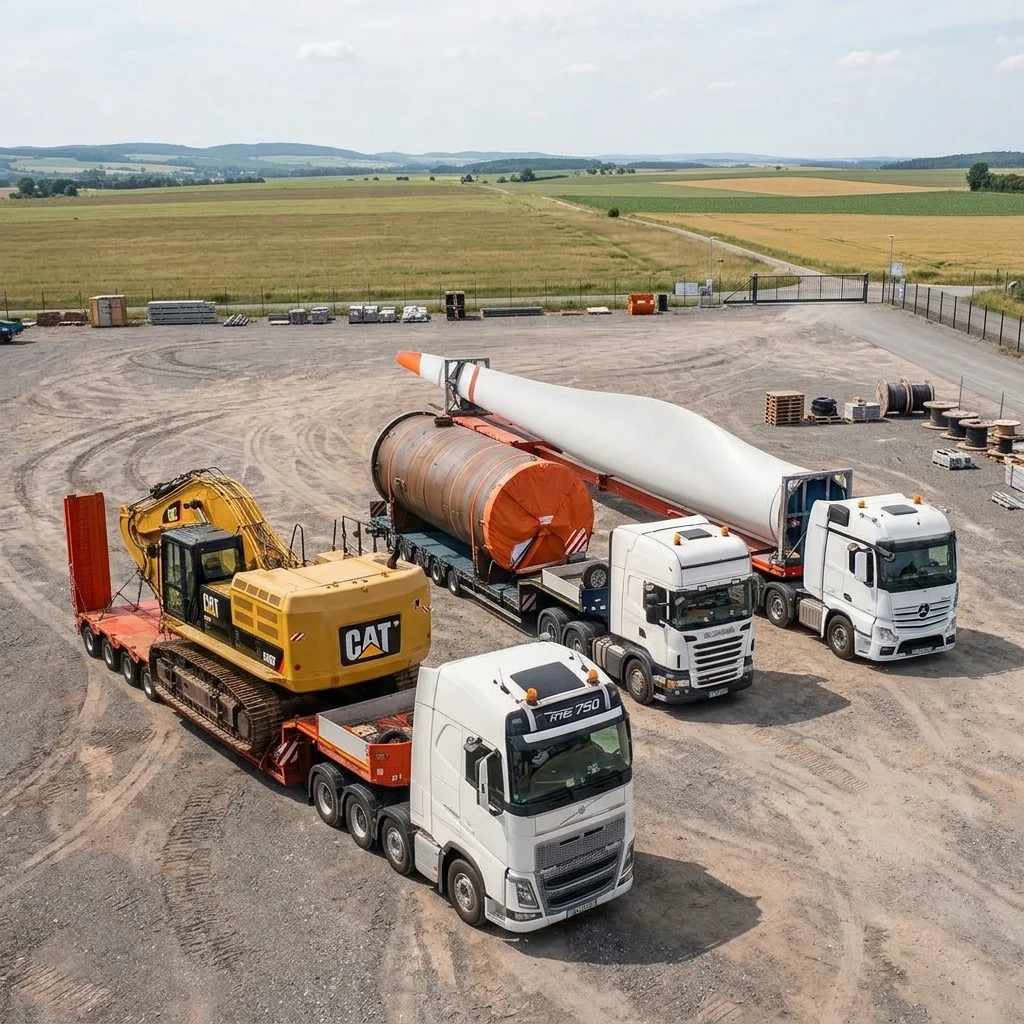
The same cargo by weight can travel on completely different equipment — a standard low-bed trailer or a modular platform with a dozen axle lines. The equipment is selected for the parameters of the specific cargo.
Where Selection Starts
Weight is not the primary parameter. What matters more is how the cargo distributes the load. A compact heavy load with an evenly positioned centre of gravity and a load of the same mass but elongated or asymmetric in shape are two entirely different calculations — even if the spec sheet shows the same number.
Beyond the centre-of-gravity position, engineers assess the overall geometry of the oversized cargo in detail. Even at a relatively modest weight, excessive length or offset bearing points completely change the driving dynamics of the convoy. A comprehensive technical analysis is therefore carried out immediately before loading:
- — Axle loads: an accurate placement plan helps avoid critical pressure on the tractor's drive axle or rear axle;
- — Dimensions and wind resistance: affect the choice of trailer frame height and the overall road stability of the equipment;
- — Lashing integration: determines exactly how the item will be secured with chains and straps on the working surface.
Since we primarily organise road transport, the choice of rolling stock is strictly governed by the load-bearing capacity of roads and bridge structures.
Flatbed Trailers — up to 22 tonnes
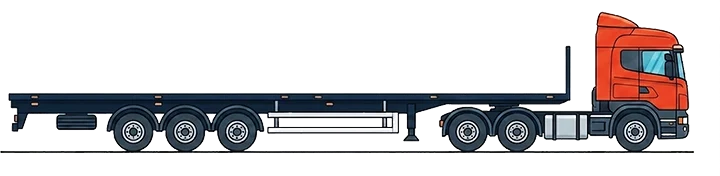
For comparatively light loads where parameters exceed standard limits only marginally, open flatbed trailers are used. This is the most accessible equipment option — suitable as long as the cargo weight does not exceed 22 tonnes.
Low-Bed Trailers — 45 to 100 tonnes

When cargo weight falls in the 45–100-tonne range, low-bed trailers are the choice. This remains a more economical option than a modular system: cheaper to hire and simpler to route.
Modular Platform Trailers — over 100 tonnes

From 100 tonnes upward, modular systems come into play, where the number of axle lines is calibrated to the specific weight — distributing the load within permitted per-axle limits. Extra axles add cost without adding value, so the calculation is made individually for each cargo.
Sometimes the Lashing Matters More Than the Platform
For cargo that is sensitive to vibration and tilt — transformers, reactors, large industrial plant assemblies — the securing arrangement is equally critical. Cylindrical or complex-shaped cargo is mounted on cradle supports fabricated to match its specific geometry. An error in lashing costs more than an error in platform selection.
Equipment and Route Are Selected Together
Cargo with identical spec-sheet parameters can require different equipment depending on the route: some bridges carry a lower per-axle load limit, some turning points are narrower than usual. Trailer selection and route calculation go hand in hand — equipment that fits the cargo's parameters sometimes cannot pass a specific road.
Frequently Asked Questions
How is a trailer chosen for oversized cargo?
Equipment is selected based on the cargo's weight and shape, as well as road conditions along the route. For cargo up to 22 tonnes, a flatbed trailer is usually sufficient; 45 to 100 tonnes — a low-bed trailer; over 100 tonnes — a modular platform with an adjustable number of axles.
What is the difference between a low-bed trailer and a modular platform?
A low-bed platform handles cargo roughly in the 45–100-tonne range and costs less. A modular system with a variable axle count is needed above 100 tonnes, while a flatbed is typically enough for loads up to 22 tonnes.
Why might cargo of the same weight require different equipment?
Within the same weight category, cargo shape and centre-of-gravity position vary, and bridge conditions and turning widths differ from route to route — both factors change the final platform choice.
How many axles does a modular trailer have for super-heavy cargo?
There is no fixed technical ceiling: modules couple longitudinally and laterally into a single indivisible system, forming platforms with 8, 12, 16, 24, 32, or more axles — the number of axle lines is scaled to the specific cargo weight.
Matching equipment to a specific cargo — including route calculation and axle load analysis — is part of the NG-NEGABARIT service. View the fleet